
LeaseDOK

Lease review that saves brokers hours, so you can spend time on relationships.

LeaseDOK reviews every lease in minutes, organizing the information into a clear, easy-to-follow format while identifying potential risks, missing terms, and opportunities to negotiate. Instead of spending hours working through the fine print, brokers can quickly focus on what matters most and spend more time advising their clients.
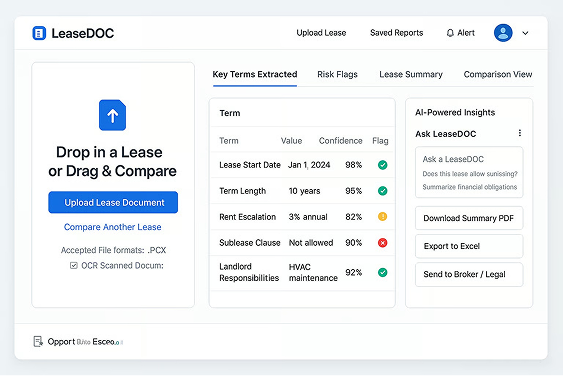
LeaseDOK interface showing lease document analysis and key terms extraction

Lease review is one of the most time-consuming parts of any commercial real estate transaction. LeaseDOK reads the LOI and draft leases, then organizes every lease term, rent schedule, option period, maintenance obligations, exclusivity clauses, and opportunities to negotiate, into a structured, searchable summary. Original documents are redacted on upload, identifying information is anonymized, allowing firms to build a library of lease language and market insights without exposing confidential client information.

HOW IT WORKS

How LeaseDOK Works

FAQ

Frequently Asked Questions

Commercial lease review software is AI-powered technology that reads a commercial lease, extracts and organizes its clauses, and flags risks, missing terms, and inconsistencies so a broker can review a lease in minutes instead of hours. Tools like LeaseDOK also compare the lease against the negotiated LOI and redact confidential client information before any analysis begins.

Lease redaction removes identifying information — party names, addresses, and financial identifiers — from a lease before it is stored or analyzed. Because the sensitive details never enter the system, brokers can use software to review documents and build clause libraries without exposing confidential client information.

Brokers should confirm that the business terms negotiated in the LOI made it into the lease: rent and escalations, tenant improvement allowances, renewal and termination options, operating expense definitions, assignment and sublease rights, and any language that quietly shifts risk to the tenant. Small wording changes can have large financial consequences, which is why careful comparison matters.